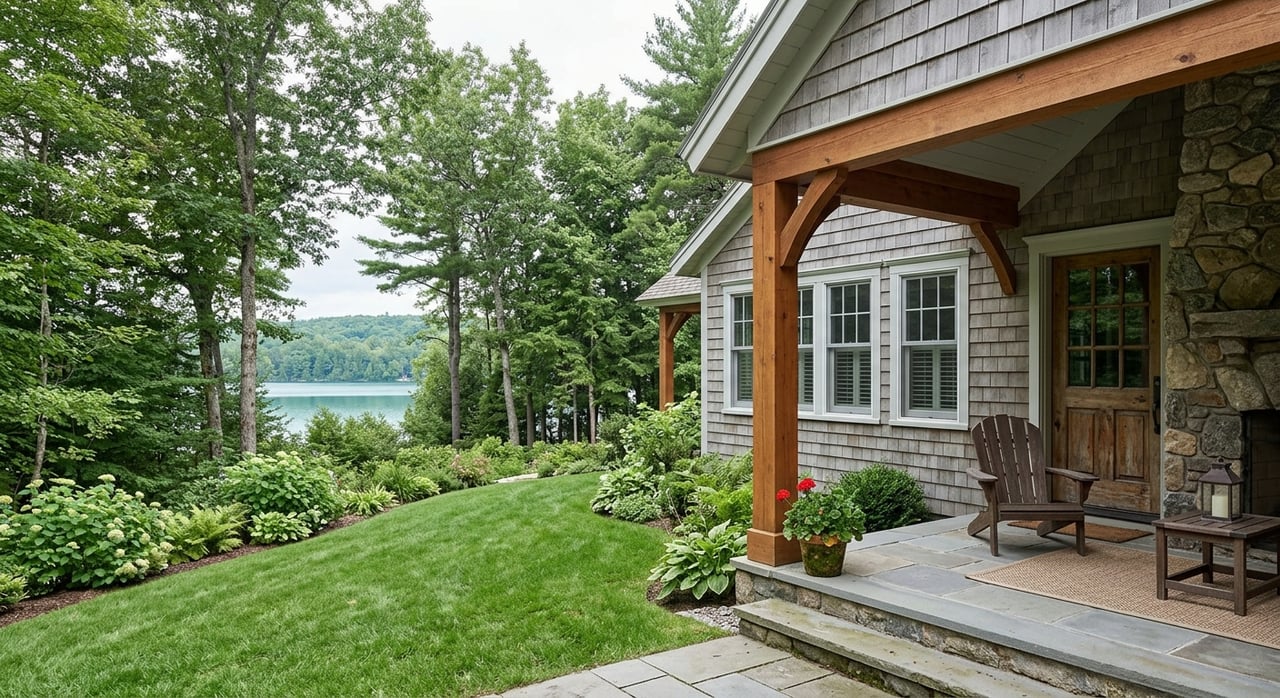
Wondering if you can buy a Seneca County lake home and use it as a short-term rental? That question is more complicated than many buyers expect. If you are counting on rental income from a cottage or lakefront home, you need to know that taxes, permits, and local town rules can all affect whether your plan works. This guide will help you understand the rules that matter most before you buy or sell. Let’s dive in.
Why STR rules matter in Seneca County
In Seneca County, short-term rental compliance is not controlled by just one rule. New York State sales-tax rules apply, Seneca County has its own occupancy tax, and the town or village where the property sits decides whether a short-term rental is allowed in the first place.
That means the biggest question is often not how much income a property could make. The real question is whether the exact property can legally operate as a short-term rental after you close.
For lake homes, this matters even more. Properties near the water often face added practical issues like parking, septic capacity, occupancy limits, and permit conditions that can shape whether a home is a realistic rental investment.
Municipal rules come first
If you are looking at a lake home in Seneca County, the town rules are the make-or-break issue. Before you rely on projected rental income, you should confirm the current short-term rental rules for the exact parcel.
Here is what the current research shows for key lake-area towns.
Seneca Falls STR rules
In the Town of Seneca Falls, short-term rentals are allowed in residential zones, but you must obtain a permit before operating. The permit runs for one calendar year and expires on December 31.
This is especially important for buyers because the permit is tied to both the property and the owner. If you buy a home with an existing short-term rental setup, you should expect to file a new application after closing rather than assume the current permit transfers to you.
There is also a fee detail worth noting. An older town FAQ mentions a $500 annual renewal fee, but a May 2025 town board resolution reduced the annual renewal fee to $150 while keeping the application fee at $50. If you are doing net-income calculations, it is smart to verify the current fee schedule directly with code enforcement before making decisions.
Varick STR rules
In the Town of Varick, a permit is also required for short-term rentals. For many lake buyers, the biggest issue is that the town says the permit cap in the Lakeshore Residential Districts has already been reached, and no new permits are available there.
That makes Varick one of the clearest examples of why you cannot assume every lake house is short-term rental eligible. A home may look perfect on paper, but if it sits in a capped lakeshore district, your rental plan may not be possible.
Varick does note that permits may still be available in Agriculture and Rural Residential districts. The town also says owner-occupied and owner-supervised rentals are exempt from the lakeshore cap, but those categories are defined narrowly based on where the owner lives and whether the owner is present during the rental period.
Varick permits are not transferable. When title changes, the permit terminates. If you are buying there, you should treat any existing STR use as nontransferable unless you confirm your own path to approval.
Fayette STR rules
In the Town of Fayette, land-use regulations define a vacation rental as a dwelling rented for fewer than 30 consecutive nights. The town’s website also references a short-term rental application and a proposed temporary moratorium in the Lakeshore/Canal district.
For buyers, that means extra caution is needed. If you are considering a Fayette lake property, you should check the latest town actions before counting on short-term rental income.
Because the rules are under active review, current verification is essential. A property that appears workable today may need a closer look based on the latest local action.
Permit transfer is a major buyer issue
One of the most common mistakes buyers make is assuming the seller’s permit will carry over. In the verified local examples here, that is not the case.
Seneca Falls says the permit is tied to the property and the owner, so a buyer must reapply after a sale. Varick says the permit is not transferable and ends when title changes.
If you are shopping for an investment or second home, this should be part of your due diligence early in the process. Existing rental history may be helpful context, but it is not the same as guaranteed approval for a new owner.
Seneca County taxes for short-term rentals
Even if a property is allowed to operate as a short-term rental, taxes still affect your bottom line. In Seneca County, both New York State tax rules and county occupancy-tax rules matter.
New York sales tax rules
New York says occupancy in a short-term rental unit is generally subject to state and local sales tax when the rental rate is more than $2 per day. The combined rate includes the 4% state rate plus the applicable local rate for the property address.
New York also says booking services that facilitate short-term rental occupancy sales may be required to collect sales tax. That can help with compliance, but it does not remove all local responsibilities.
Seneca County occupancy tax
Seneca County imposes a separate 3% occupancy tax under Local Law 3 of 2022. According to the county treasurer, this law applies to lodging facilities including vacation rentals, cabins, cottages, condos, inns, and similar accommodations.
The county says operators must register within 3 days of starting. The tax must be stated separately, and quarterly returns are required.
The county also says a vacation rental must be registered even if the owner has already registered with the town. In other words, town approval and county tax registration are separate steps.
Why platform collection is not the full picture
A lot of owners assume that if a platform collects taxes, they are fully covered. That is not always true.
New York says booking services may collect sales tax on occupancy. But Seneca County still says the operator remains responsible for reporting and paying the county occupancy tax, even when a third-party manager is involved.
If you are buying a home with plans to rent it, this is a key planning point. Platform use can simplify some tax collection, but it does not automatically satisfy every county requirement.
Longer stays can be treated differently
If you are thinking beyond weekend or weekly rentals, the tax rules get more nuanced. New York sales tax and Seneca County occupancy tax do not use the same threshold for a guest to be treated as a permanent resident.
New York sales tax treats a guest as a permanent resident after 90 consecutive days outside New York City. Seneca County’s occupancy-tax law uses a 30-day permanent-resident threshold.
That difference matters if your plan involves extended furnished stays rather than true short-term turnover. It is one more reason to look carefully at how you expect the property to be used before you rely on projected income.
Common compliance issues for lake homes
Lake properties often face the same practical review points when towns evaluate short-term rental applications. These are not small details. They can affect whether a permit is approved or whether a home is a good fit for rental use.
Based on local application materials, common issues include:
- Off-street parking
- Septic capacity
- Smoke alarms
- Carbon-monoxide alarms
- Safe egress
- Trash handling
- Occupancy limits
- A reliable local contact person
- Permit display or posted signage
- No unresolved code violations
These items come up for a reason. Lake homes can have unique site constraints, especially on smaller lots or older cottages. A home with strong rental appeal still needs to meet the town’s practical standards.
What buyers should do before counting STR income
If you are buying a Seneca County lake home for personal use plus rental income, your due diligence should go beyond the home itself. You want to confirm whether the property actually fits your rental goals after closing.
A smart review usually includes:
- Confirm the exact municipality for the parcel.
- Check whether short-term rentals are allowed in that district.
- Verify whether permits are currently available.
- Ask whether the permit transfers with a sale.
- Review parking, septic, occupancy, and safety requirements.
- Factor in state sales tax and the separate 3% county occupancy tax.
- Verify current fees and application procedures before you finalize your numbers.
This process can help you avoid overestimating income or buying a property that does not support your intended use.
What sellers should keep in mind
If you are selling a lake home that has been used as a short-term rental, clear communication matters. Buyers may see your rental history and assume they can continue the same setup right away.
In Seneca County, that may not be true. Depending on the town, a new owner may need a new permit, may face a cap, or may need to satisfy updated requirements.
That does not make your property less appealing. It simply means the marketing and negotiation strategy should present short-term rental use carefully and factually, with an emphasis on verification rather than assumptions.
Why local guidance matters
Short-term rental rules for Seneca County lake homes are highly local. The difference between a strong rental opportunity and a dead end can come down to one town line, one permit cap, or one nontransferable approval.
That is why lakefront buyers and sellers benefit from practical, parcel-level guidance. When you understand the town rules, county tax obligations, and real-world compliance issues early, you can make much better decisions.
If you are weighing a purchase, preparing to sell, or trying to understand whether a lake property fits your goals, working with a local advisor can help you ask the right questions before the stakes get higher. For thoughtful guidance on Seneca County and Finger Lakes lake properties, reach out to Vicki Schamel.
FAQs
Do short-term rental permits transfer with a Seneca County lake home sale?
- In the verified local examples, no. Seneca Falls requires a new buyer application, and Varick says the permit is not transferable and ends when title changes.
Do Airbnb or VRBO tax collections mean a Seneca County STR is fully compliant?
- No. New York may require booking platforms to collect sales tax, but Seneca County still requires operator registration and county occupancy-tax reporting.
Are all Seneca County lake homes eligible for short-term rental income?
- No. Eligibility depends on the municipality and district. Varick’s lakeshore permit cap is full, and Fayette’s Lakeshore/Canal area is under active review.
What taxes apply to a short-term rental in Seneca County, NY?
- New York generally applies state and local sales tax to short-term rental occupancy over $2 per day, and Seneca County adds a separate 3% occupancy tax.
What property issues commonly affect Seneca County lake STR approvals?
- Common review items include parking, septic capacity, smoke and carbon-monoxide alarms, egress, trash handling, occupancy limits, local contact information, and code compliance.
Why should Seneca County buyers verify STR rules before closing?
- Because town rules, permit availability, transfer rules, and local compliance issues can all affect whether the property can legally operate as a short-term rental after the sale.