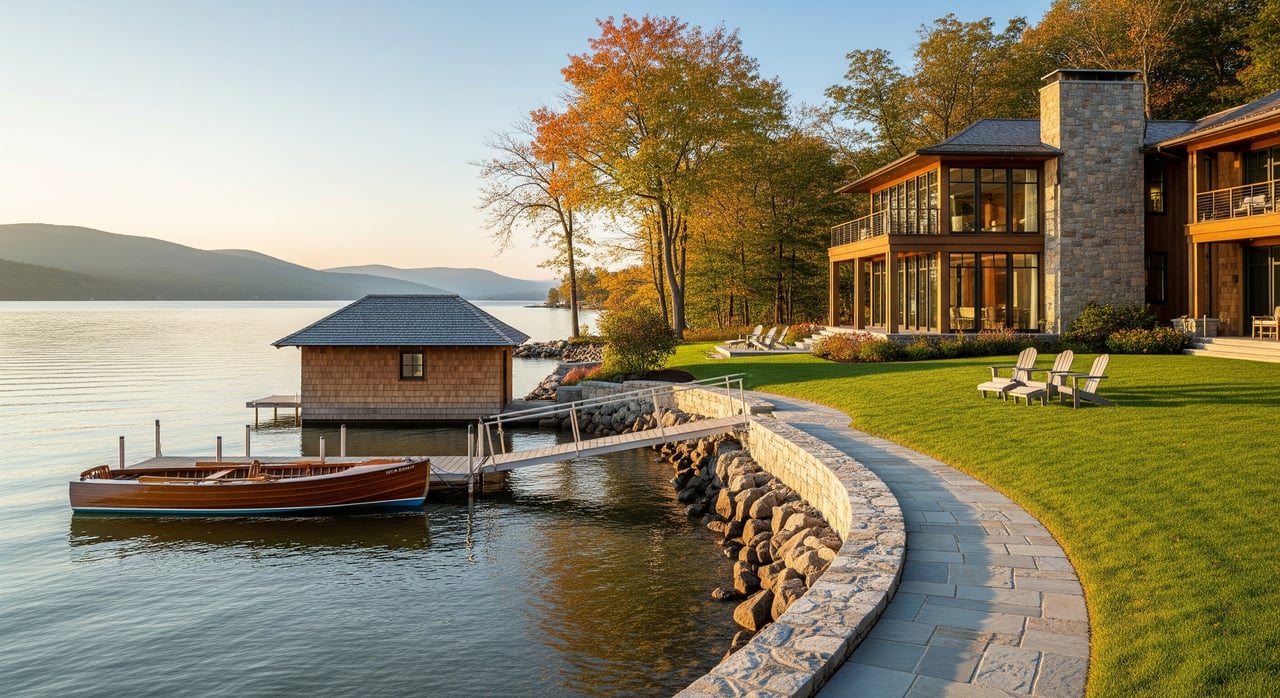
Seeing “lake rights” in a Cayuga Lake listing can feel exciting and confusing at the same time. You want easy, reliable access to the water, but it is not always clear what you actually get with a given property. A little clarity up front will help you avoid surprises and choose the right home with confidence.
In this guide, you will learn what “lake rights” typically mean around Cayuga Lake in Tompkins County, the different types of rights you might see in a deed or HOA, and exactly what to verify before you make an offer. You will also get a practical checklist and questions to ask so you can see issues early. Let’s dive in.
Lake rights on Cayuga Lake: the basics
“Lake rights” is a catch-all term buyers and sellers use to describe access to and use of the lake that is tied to a property. The term sounds simple, but it can refer to very different legal situations. Here are the most common types you will see in Tompkins County:
Riparian rights if you own waterfront
If a parcel physically touches Cayuga Lake, it usually carries riparian rights. That typically includes reasonable access to and use of the water, like launching a kayak, swimming, or potentially placing a dock, subject to permits and local rules. These rights are not unlimited. State law and public-trust principles apply, and local municipalities around the lake have their own shoreline rules.
Deeded access or easements
Some off-water homes come with recorded easements that allow you to use a defined shoreline area, beach, path, or dock. The deed language controls everything: who can use it, where it is, if it is exclusive or shared, how maintenance costs are handled, and whether the right transfers to future owners. Read the recorded instrument closely.
Community or HOA beach and docks
In some neighborhoods, an HOA or association controls a common shoreline area. Your use is tied to membership, payment of dues, and compliance with rules. Benefits may include a beach, picnic space, or a dock with assigned slips. Expect bylaws, budgets, and policies that govern use, guests, parking, and maintenance.
Prescriptive or implied rights
Long, open use by the public or neighbors can sometimes create limited rights over time, but these are case-specific and often disputed. Do not rely on a “we’ve always used that path” story without verification.
Public access and navigation
Cayuga Lake is a navigable waterbody with public rights of navigation. That does not mean you get private shoreline access unless it is recorded, deeded, or otherwise authorized. Public launches and parks exist around the lake, but these do not create private rights for nearby homes.
How local rules shape what you can do
New York riparian principles and state regulations set the framework, and local municipalities add their own rules. Around Cayuga Lake, towns and the City of Ithaca manage zoning, setbacks, dock standards, and sometimes mooring or shoreline structure rules. The Town of Lansing, Town of Ithaca, City of Ithaca, and Ulysses may each handle docks, retaining walls, and shoreline projects differently.
The New York State Department of Environmental Conservation regulates many in-water and shoreline activities, such as docks, fills, and some wetland or habitat work. You may also interact with federal agencies for certain projects. Because multiple layers apply, the ability to add or expand a dock usually depends on both state and municipal approvals. You should not assume that a waterfront deed alone guarantees building rights.
County resources can help with early research. Tompkins County’s Clerk and GIS offices can show you recorded deeds, easements, tax maps, and parcel boundaries. These tools are great for a first look, but you still need a full title review and a survey to confirm the details.
Common lake-rights setups you will encounter
True waterfront with riparian rights
What it means: Your land touches Cayuga Lake. You likely have the strongest bundle of rights to access and use the water, subject to permits and recorded restrictions.
Buyer checklist:
- Confirm the property line and the high-water mark with a survey.
- Ask for permits for any existing dock or shoreline work.
- Review any covenants or easements that limit docks, moorings, or access.
- Plan for maintenance and insurance costs related to shoreline structures.
Key reminder: Riparian rights do not guarantee a dock. Local and state approvals may still be required, and conservation rules can apply.
Deeded lake access or private easement
What it means: Your deed includes a recorded right to use a defined shoreline area, dock, or path. It can be exclusive or non-exclusive and may run with the land or be personal in nature.
Buyer checklist:
- Read the recorded instrument. Look for the exact location, exclusivity, transferability, use limits, and maintenance obligations.
- Confirm whether there is parking, guest access, and any slip assignment process.
- Check for termination clauses or conditions that could end the right.
Key reminder: The specific wording governs your access. “Lake rights” in a listing is not enough. Always verify what is recorded.
Community beaches, docks, and HOA arrangements
What it means: An association controls a common shoreline amenity. Your access depends on membership rules and dues.
Buyer checklist:
- Request the declaration, bylaws, rules, and recent meeting minutes.
- Review the budget and reserves for docks, seawalls, and parking areas.
- Ask about waitlists for slips, guest policies, and quiet hours.
- Confirm insurance coverage for shared areas and any owner obligations.
Key reminder: HOA governance affects day-to-day use and costs. Evaluate the financial health and rule enforcement culture before you buy.
Easements in gross, prescriptive claims, and conservation limits
What it means: Some rights benefit a person or entity rather than a parcel, which can limit transferability. Prescriptive claims are fact-specific and often contested. Conservation easements or public ownership along the shore can restrict development and access.
Buyer checklist:
- Seek a title review and real estate attorney opinion on ambiguous or personal rights.
- Investigate conservation easements that could limit improvements or access.
- Verify any longstanding use is recorded and enforceable before you rely on it.
What to verify before you write an offer
Gather these documents early so you can make decisions with confidence:
- Full deed for the property and any parcel tied to shared access.
- Recorded easements or covenants that describe any lake rights.
- Preliminary title report showing easements, restrictions, and exceptions.
- Recent survey or plot plan with property lines, shoreline, and structures.
- Permits for existing docks, stairs, retaining walls, or shoreline work.
- HOA documents if applicable: declaration, bylaws, rules, meeting minutes, budget, and reserve study.
- Maintenance agreements and cost allocations for docks, seawalls, and parking.
- Insurance evidence for shared amenities.
Questions to ask the seller and listing agent
- Is there a recorded instrument for the lake right or access? Can I see it?
- Is access exclusive, shared with specific lots, or members only?
- Who handles maintenance and how are costs split?
- Are there any disputes, claims, or litigation related to access or docks?
- Have any permits or variances been issued for shoreline structures, and are they transferable?
- Are there waitlists, fees, or assignments for dock slips and parking?
Red flags that should slow you down
- Vague deed language that simply says “lake rights” without a recorded easement.
- No survey or unclear high-water mark location.
- Unpermitted docks or shoreline structures.
- Nontransferable rights or easements that terminate on sale.
- HOA with low reserves, frequent special assessments, or unresolved disputes.
- Reliance on informal access that is not documented or recorded.
Waterfront vs lake-access tradeoffs in Tompkins County
Waterfront lots provide immediate access and typically stronger riparian rights. They also carry higher purchase prices, more direct maintenance responsibilities, and potential exposure to erosion or flood risk. You will likely spend more time on permits and shoreline upkeep.
Lake-access homes that are not on the water are usually more affordable, and you may have fewer direct maintenance obligations. Your use can be more restricted. You may share the beach, have limited parking, or face rules for guests, boat size, and slip availability. Decide what matters most to your daily lake life before you choose.
Permits, boundaries, and maintenance
Most shoreline improvements require approvals. Expect to coordinate with your local municipality and with state agencies for in-water work. If you buy a home with an existing dock or seawall, verify the permit history and whether you can maintain or modify it.
Boundaries near the water can be complex. Erosion, accretion, and artificial changes can affect where private property ends. A current survey and a title review will help clarify your rights to the high-water mark and any encroachments.
Shared beaches and docks bring shared costs. Review maintenance agreements and understand how expenses are split. Ask if there is a reserve fund, how repairs are prioritized, and whether special assessments are common.
How to verify in Tompkins County
- Tompkins County Clerk or Recorder for recorded deeds, easements, and covenants.
- Tompkins County GIS and tax maps for parcel boundaries and aerial context.
- Municipal building and zoning offices in the City of Ithaca, Town of Ithaca, Town of Lansing, Ulysses, and other shoreline towns for dock rules, setbacks, and local permit history.
- New York State Department of Environmental Conservation for in-water and shoreline permit requirements and environmental rules.
- Tompkins County Health Department for septic and wastewater setbacks near the lake.
- Local land trusts and conservation organizations for any conservation easements.
- A title company, a qualified real estate attorney, and a licensed surveyor for document review and boundary confirmation.
Next steps and how to move forward
If you find a Cayuga Lake home you love, slow down long enough to gather the deed, easements, survey, permits, and HOA records. Clarify whether your access is exclusive or shared, how docks are managed, and what the long-term costs might be. With the right documents and guidance, you can buy with clarity and enjoy the lake the way you intend.
This article explains common types of lake rights around Cayuga Lake but is informational only. Rights depend on recorded deeds, municipal rules, and state law. Consult the Tompkins County Clerk, local municipal offices, NYSDEC, and a qualified real estate attorney before relying on any specific claim of access or building rights.
When you are ready to evaluate a specific property or you want a clear path from first showing to closing, reach out to Vicki Schamel for a thoughtful, local consultation.
FAQs
What does “lake rights” mean for a Cayuga Lake home in Tompkins County?
- It is a general term that could mean riparian rights for waterfront, a recorded deeded easement, HOA-controlled access, or informal use that may not be enforceable.
If I own waterfront, can I build a dock on Cayuga Lake?
- Maybe. Docks and in-water work usually require approvals from your municipality and state regulators and may be limited by recorded covenants or HOA rules.
How do I know if a lake-access right is exclusive or shared?
- Read the recorded easement or HOA documents. The instrument should state exclusivity, location, transferability, and any use limits or maintenance obligations.
Can an HOA change or revoke my beach or dock access?
- It depends on the governing documents. Rights that run with the land are more durable, but associations can adjust rules within their authority and some rights can terminate if conditions are not met.
What documents should I collect before making an offer on a Cayuga Lake property?
- Ask for the deed, recorded easements, title report, survey, permits for shoreline structures, HOA documents, maintenance agreements, and evidence of insurance for shared amenities.
Who pays for repairs to shared docks or seawalls on Cayuga Lake?
- The recorded easement or HOA documents control. They should outline cost sharing, reserve funds, and how special assessments are handled.